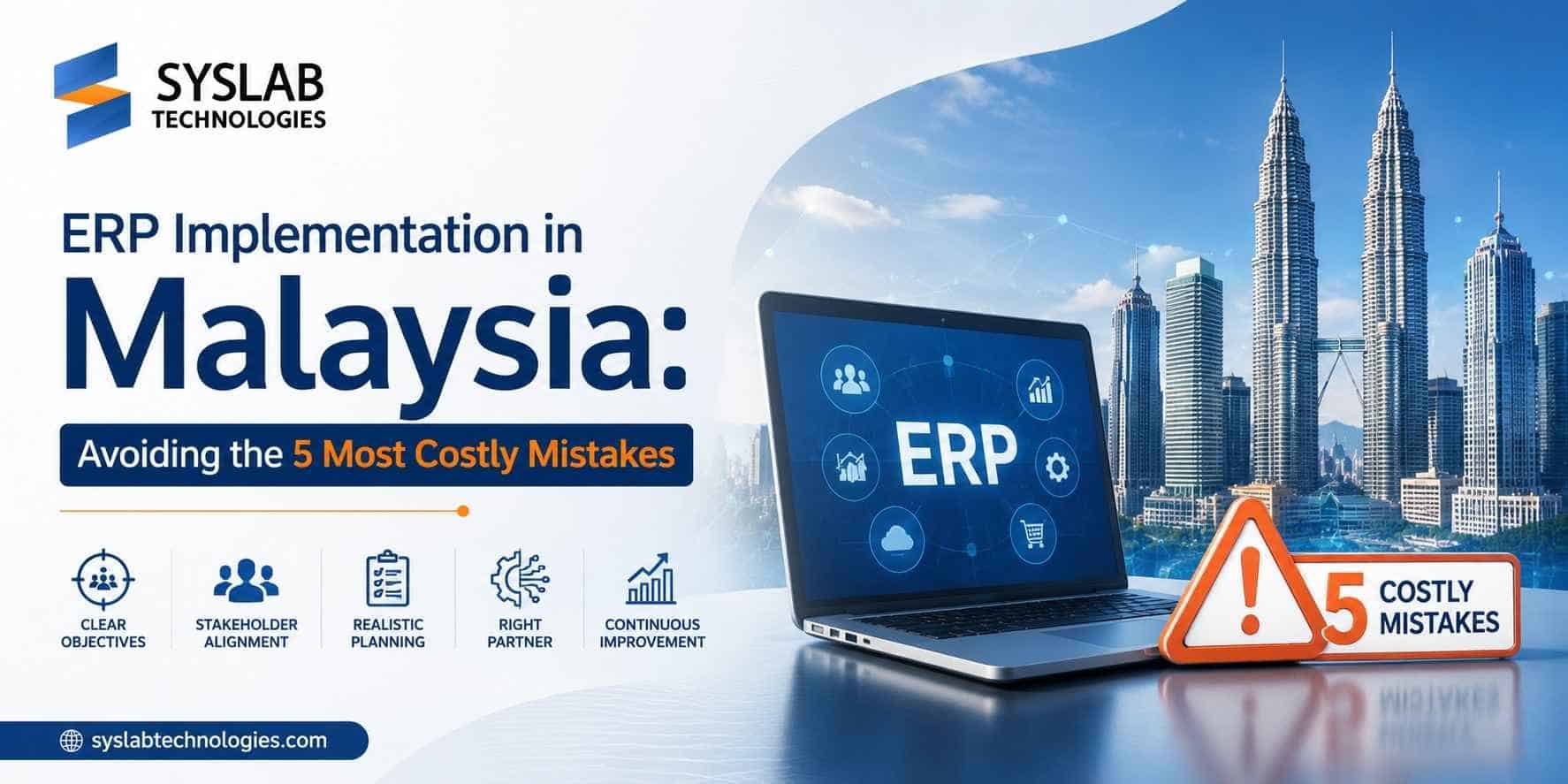
ERP projects have a well-documented history of running over budget and over time. Research from McKinsey & Company and Gartner consistently shows that between 55 % and 75 % of ERP implementation Malaysia encounter significant problems. For Malaysian SMEs—where capital and management bandwidth are limited—a failed implementation is not just painful; it can threaten the business.
The good news: ERP failures are not random. They follow predictable patterns. Here are the five most common and most costly mistakes Malaysian manufacturers make, and exactly how to avoid them.
5 Common ERP implementation Malaysia mistakes
Mistake 1: Choosing Software Before Defining Requirements
The most common mistake is starting an ERP project by evaluating vendor demos. Watching a slick demonstration is exciting, but it encourages you to choose a platform based on what it looks like rather than whether it solves your actual problems.
The right starting point is a requirements workshop: document your current processes, map your pain points, define the specific outcomes you need (for example: ‘purchase orders auto-generated when stock drops below reorder point’), and then evaluate vendors against that list.
Syslab Technologies begins every engagement with a discovery session where consultants map your existing workflows before proposing any solution. This ensures the software is built to fit your operation—not the other way around.
Mistake 2: Underestimating Data Migration
Migrating years of data from Excel files, legacy accounting software, and paper records into a new ERP is typically the most time-consuming and error-prone part of any implementation. Teams often underestimate the effort by 300–500 %.
Best practices to prevent data migration disasters:
- Audit and clean your data before migration begins—duplicates, inconsistent naming conventions, and missing fields will corrupt your new system
- Migrate in phases: master data (products, suppliers, customers) first, then historical transactions
- Run parallel systems for at least one month to validate migrated data against live operations
Mistake 3: Inadequate Change Management and Training
Technology is only half of an ERP project. The other half is people. Even a perfectly built system fails if staff revert to spreadsheets because the ERP feels unfamiliar or difficult.
Effective change management for Malaysian manufacturing teams includes:
- Involving floor supervisors and department heads in the design phase—they become internal champions
- Training in Bahasa Malaysia and English, with role-specific guides rather than one-size-fits-all manuals
- A hypercare period (first 30–60 days post-launch) with daily check-ins and rapid bug resolution
Syslab provides comprehensive training and a dedicated support team throughout implementation and beyond.
Mistake 4: Scope Creep Without a Change Control Process
‘Can we also add a module for…?’ is the phrase that derails more ERP projects than any technical problem. Every addition to scope—even small ones—consumes development time, testing cycles, and budget.
The remedy is a formal change control process: any requirement added after the project scope is signed off is logged, estimated, priced, and approved before work begins. Syslab’s fixed-cost model enforces this discipline: the original scope is delivered on budget, and any changes are transparently costed as separate line items.
Mistake 5: Treating Go-Live as the Finish Line
Going live is not the end of the project—it is the beginning of the optimisation phase. Many SMEs cut their implementation budget just before go-live, leaving no resource for post-launch improvements.
ERP systems improve with use. As your team becomes familiar with the platform, they identify new automation opportunities, better reporting views, and additional modules worth adding. Budgeting for a 6–12 month post-launch optimisation phase ensures you capture this value.
How to Choose an ERP Implementation Partner in Malaysia
The right implementation partner matters as much as the right software. When evaluating ERP consultants in Malaysia, look for:
- A track record in your industry (manufacturing, logistics, retail, etc.)
- Fixed-cost proposals with milestone-based payments
- Source code ownership included—not withheld as leverage
- Local team with Malaysia-specific compliance knowledge
- References from businesses of a similar size and complexity
Syslab Technologies meets all five criteria, with a proven methodology across 100+ ERP deployments in manufacturing, logistics, retail, and services. Their ERP system solutions for Malaysian businesses are designed from the ground up to avoid the mistakes outlined in this guide.
Key Takeaways
- Define requirements before evaluating vendors
- Treat data migration as a major project phase, not an afterthought
- Invest in change management and role-specific training
- Enforce a change control process to protect scope and budget
- Budget for a post-launch optimisation phase
Planning an ERP implementation and want a second opinion on your approach? Speak with Syslab’s consultants for a free review of your requirements.