As Malaysia accelerates toward nationwide digitalisation, e-invoicing has become one of the most important transformation initiatives for businesses. With the Inland Revenue Board (LHDN) announcing phased e-invoice adoption, companies across all sectors — from SMEs to large enterprises — are preparing to modernise their financial workflows.
E-invoicing is more than just replacing paper-based invoices. It is a complete shift in how organisations create, validate, exchange, and store financial documents. When implemented correctly, e-invoicing brings significant operational, financial, and compliance advantages.
This article explores the key benefits of e-invoicing, how it transforms internal processes, and why partnering with a technology provider like Syslab Technologies leads to long-term gains.
Benefits of E-Invoicing
1. Faster Invoice Processing & Reduced Manual Work
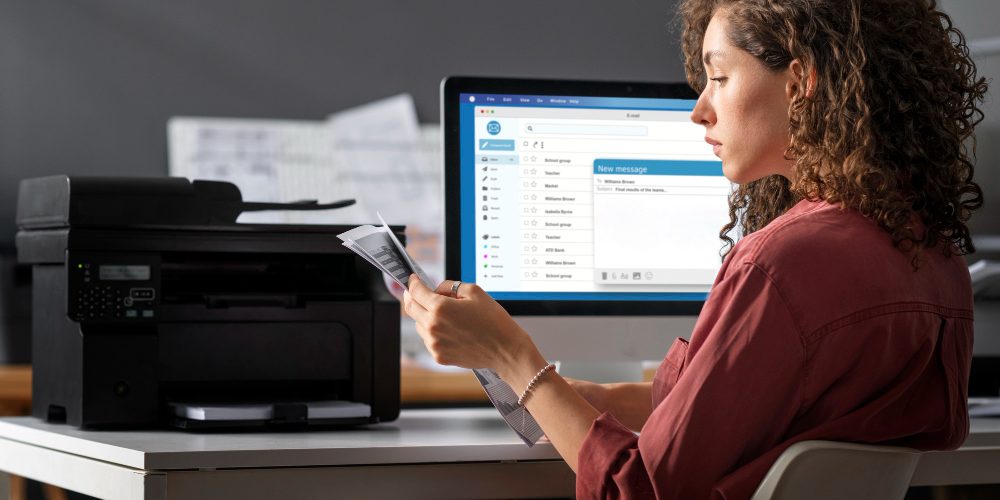
Traditional invoicing involves data entry, printing, scanning, emailing, and reconciliation. These manual steps create friction, delays, and errors.
E-invoicing automates the entire workflow:
- Generate invoices digitally
- Auto-validate required fields
- Send invoices electronically to customers or LHDN systems
- Auto-capture data into ERP/accounting systems
This reduces processing time by up to 70%, enabling finance teams to focus on analysis rather than paperwork.
2. Improved Accuracy & Error Reduction
Manual data entry is prone to:
- Incorrect totals
- Duplicate invoices
- Missing line items
- Human input mistakes
E-invoicing systems automatically validate invoice details, formats, tax codes, and mandatory fields before submission. This dramatically reduces errors and ensures consistent financial records.
3. Enhanced Compliance with LHDN Requirements
Malaysia’s e-invoice framework introduces mandatory data fields, reporting rules, and specific formats.
Using an e-invoicing system ensures:
- Structured data formats (JSON/XML)
- Auto-submission to MyInvois Portal
- Validation against LHDN rules
- Real-time reporting and status tracking
This reduces the risk of penalties for non-compliance and ensures your business always meets government regulations.
4. Faster Payments & Improved Cash Flow
E-invoicing improves cash flow by shortening the invoice-to-payment cycle:
- Customers receive invoices instantly
- Less chance of delays or disputes
- Automated reminders accelerate collections
- Accurate records reduce back-and-forth communication
Businesses often see improved DSO (Days Sales Outstanding) and better cash flow predictability.
5. Increased Transparency & Real-Time Visibility
E-invoicing provides a digital audit trail with:
- Complete invoice lifecycle tracking
- Status updates (submitted, validated, approved, rejected)
- Document history and version control
Finance managers gain real-time insight into revenue streams, outstanding payments, and compliance status.
6. Stronger Security & Reduced Fraud
Paper or PDF invoices are vulnerable to:
- Tampering
- Forgery
- Loss during delivery
- Unauthorised modifications
E-invoicing platforms use:
- Encrypted data transmission
- Strict identity validation
- Secure storage
- Unique invoice identifiers
These security layers significantly reduce fraud and ensure only authentic invoices enter the system.
7. Lower Operational Costs
Businesses save on:
- Printing
- Postage
- Archiving
- Physical document storage
- Labour hours
Studies show that e-invoicing reduces invoicing cost per document by 50–80% depending on volume.
8. Better Integration With ERP & Business Systems
Modern e-invoicing systems connect directly with:
- ERP software
- Accounting tools
- POS systems
- Procurement platforms
- Payment gateways
Syslab Technologies integrates e-invoicing into ERP workflows, ensuring seamless data flow without manual imports or exports.
9. Environmentally Friendly & Sustainable
Reducing paper usage supports ESG and sustainability goals.
Digital invoicing cuts:
- Printing waste
- Physical storage
- Transportation emissions
This aligns with modern corporate responsibility standards.
Why Businesses in Malaysia Are Prioritising E-Invoicing
With LHDN’s national compliance roadmap, businesses that adopt early gain:
- Competitive advantage
- Optimised internal workflows
- Long-term cost savings
- Reduced compliance risk
Early adopters will also avoid last-minute migration rushes and operational bottlenecks.
How Syslab Technologies Helps You Implement E-Invoicing
Syslab Technologies provides a complete e-invoicing solution tailored to your business needs.
Our services include:
- Custom integration with ERP or accounting systems
- API connectivity with MyInvois (LHDN)
- Automated invoice validation & submission
- Real-time tracking dashboards
- User training & onboarding
- Secure cloud or on-premise deployment
Whether you’re an SME or a large organisation, we ensure smooth, compliant, and scalable e-invoice adoption.
Final Thoughts
E-invoicing is no longer optional — it is a core component of modern business operations in Malaysia. The companies that adopt early will streamline their financial processes, improve compliance, and gain stronger operational control.
With Syslab Technologies as your technology partner, transforming your invoicing system becomes seamless, secure, and fully compliant with LHDN’s standards.
FAQs:
1. What is e-invoicing and how does it work in Malaysia?
E-invoicing is a digital process where invoices are created, validated, exchanged, and stored electronically. In Malaysia, invoices must follow the LHDN e-invoice format and are submitted through the MyInvois Portal or API integration. Once validated, the system returns a QR code and Invoice ID for compliance.
2. Is e-invoicing mandatory in Malaysia?
Yes. LHDN has introduced a phased implementation timeline requiring businesses of all sizes to adopt e-invoicing. The exact enforcement date depends on annual revenue thresholds, but eventually all Malaysian businesses will be required to comply.
3. What are the key benefits of switching to e-invoicing?
The main benefits include:
- Faster processing and reduced manual work
- Fewer errors and inaccuracies
- Automated compliance with LHDN rules
- Faster payments and improved cash flow
- Enhanced transparency and auditability
- Lower operating costs
- Stronger security and fraud prevention
4. Does e-invoicing improve cash flow?
Yes. E-invoicing accelerates the invoice-to-cash cycle by delivering invoices instantly, reducing disputes, enabling automation, and improving overall billing accuracy. Businesses typically see lower DSO (Days Sales Outstanding).
5. Will my business need new software to implement e-invoicing?
Not necessarily. If your existing ERP or accounting system supports API integration, e-invoicing can be added on. Syslab Technologies offers custom integration solutions to connect your system with the LHDN MyInvois API seamlessly.
6. Are e-invoices more secure than traditional invoices?
Yes. E-invoices use encrypted digital transmission, structured formats, authentication IDs, and traceable audit logs. These layers significantly reduce the risk of invoice tampering, fraud, or loss.
7. What industries benefit the most from e-invoicing?
Every industry benefits, but it is especially impactful for:
- Retail & wholesale
- Manufacturing
- Logistics & distribution
- Professional services
- Government vendors
- Hospitality
- Engineering & construction
Any business with high invoice volume sees significant efficiency improvements.
8. How do e-invoices help with LHDN compliance?
E-invoicing ensures that all mandatory fields, tax rules, formats, and timestamp validations are automatically enforced. Submissions go directly to LHDN’s MyInvois system, reducing compliance risk and ensuring accurate reporting.
9. Can small businesses or SMEs adopt e-invoicing?
Absolutely. SMEs can use cloud-based solutions, API integrations, or lightweight invoicing modules. E-invoicing actually helps SMEs more by reducing operational costs and simplifying financial workflows.
10. How can Syslab Technologies support my e-invoicing implementation?
Syslab Technologies provides end-to-end solutions including:
- API integration with MyInvois
- ERP/Accounting system connectivity
- Automated validation & submission
- Real-time tracking dashboards
- User training and onboarding
- Scalable cloud or on-premise deployment
We ensure your business transitions smoothly and remains fully compliant.